Discipline, Not Income, Prevents Debt

A recent post by @akieler on consumerist.com (part of Consumer Reports) reports on a Northwest Mutual commissioned survey that says the average debt (excluding mortgages) for U.S. adults is $37,000. This is a case where being below average would be good!

Although it was an online survey, the results are disturbing:

  • 21% were unsure what portion of their income goes to debt repayment
  • 18% only make minimum payments
  • 14% expect to be in debt for the rest of their lives
  • 25% admit to excessive/frivolous spending

Yet when asked what change would most significantly impact their financial situation, only 7% said “having a comprehensive financial plan.” The most common response was essentially more money (36%). This may sound heartless, but no amount of money will resolve debt problems that result from a lack of fiscal discipline. From the survey: 40% of discretionary income goes to “entertainment, leisure travel, hobbies, etc.”, while only 33% goes to paying off debt. Debt piles up when you’re living beyond your means.

Forty percent of respondents said they experience moderate to high levels of anxiety based on their debt. Despite these feelings, when given the choice of how to spend an extra $2,000, 60% said they would not use it to pay down debt (although 40% said they would put it in savings… a little silver lining).

People who are struggling with debt need to establish fiscal discipline and stick to a budget. That’s Chapter 2 of my book, Basic Personal Finance.
No Excuse Not To Save

Search any finance site and you’re bound to find an article on retirement savings and the importance of starting early. It’s not exactly earth-shattering news, but I read them anyway out of morbid curiosity about the comments. Today’s entertainment (and disappointment) came from a recent Yahoo! Finance story about retirement mistakes to avoid:

  • Not Starting Early
  • Not having a Roth IRA
  • Raiding your retirement account
  • Cashing out your 401(k)

Good advice, but with any article I see on savings, there’s always some comment about how hard it is or “easy for you to say” from someone claiming difficult life circumstances or just flat out hatred for banks or Wall Street. Here are some of the comments from this story (typos and all):

  • Just making financial institutions,FATTER!
  • With rent in Toronto what it is, your dollar earned at Starbucks can only carry you so far. Share your dwelling with 14 other millenials, and you MIGHT have something to spend on your retirement day.
  • DO NOT believe any of these financial advisor’s #$%$. Yes, they have good advice but it doesn’t apply to most of us.
  • Likely the biggest mistake is thinking you’ll be able to retire.
  • Kinda hard to give a damn about retirement when you’re just trying to keep the lights on another week.
  • Unrealistic for the vast majority of young people to start saving at age 25. More like 35 once they establish a career. Every time I read an article that says start saving at 25 I know they are out of touch.

It’s sad that there are so many people who don’t get it. The point of starting early is to benefit from compounding interest. You can actually save less and have more at retirement if you start early. See the example from Chapter 6 of Basic Personal Finance.

The key is being disciplined with your spending. Create a budget to identify frivolous spending and get it under control. Here’s an example from the comments that I wished I had used in the book: “Don’t spend more on coffee every day than you save for retirement every month.”

If you can’t afford to save 10% of your income, you’re living beyond your means. Rather than making excuses for why you can’t save, use your energy thinking of ways that you can save.

Social Security: Take It While You Can!

Today’s post is for the chronologically gifted (i.e., those eligible for Social Security). The conclusion from a Sean Williams article on The Motley Fool: take your benefits while you can. The only way holding off on social security benefits pays off is if you expect to live beyond 85. It’s a morbid thought, thinking about when you’ll die, but that’s the fact of retirement planning. You have to make sure there’s enough money to support yourself while you are alive.

Williams used the average monthly Social Security payout for retirees ($1,363.66) and looked at lifetime payouts for various retirement ages (62 to 70). Assuming 2% cost of living adjustments, the 62-year-old retiree’s payouts exceeds all others until age 85. So if you’re eligible for Social Security, you may as well take it now. You’ll get lower monthly payments but greater total benefits.

For the rest of us, realize how little Social Security actually pays: $1,363.66 x 12 = $16,363.92. That’s not much to live on, even if you have no debt. You need to start planning now to make sure you grow a retirement nest egg that will support the quality of life you want in the future. Also read Chapter 6 of Basic Personal Finance and you’ll realize you’re Social Security benefits will be less than current retirees (if you get any at all).

Median Savings (Again)

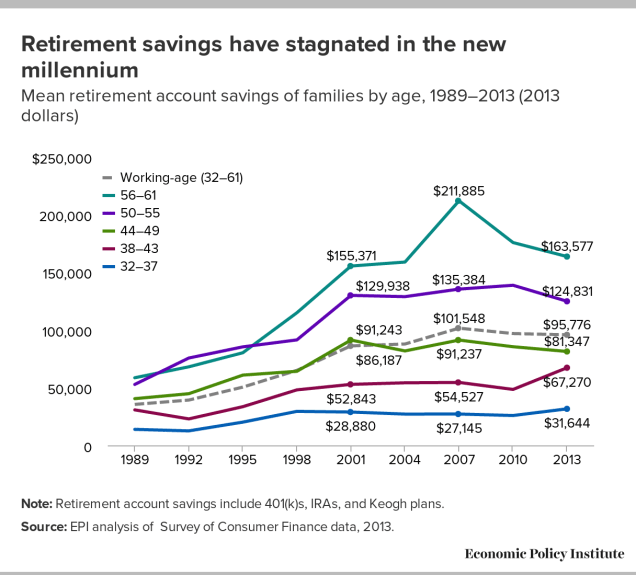
CNBC is milking the Economic Policy Institute report from March 2016 to report “news” over a year later. This time it’s average and median retirement savings for people in their 50s.

Age Average Median
50-55 $124,831 $8,000
56-61 $163,577 $17,000

Note how low those medians are. I used the age 32-37 median (< $500!) on the back cover of Basic Personal Finance. These numbers show that over half the population is not prepared to support themselves in retirement. Don’t let that happen to you. The key is to plan ahead and establish financial discipline early in your life to save for the future. That’s rule #1 in Basic Personal Finance: Pay yourself first!

The original report is here. The table below is their summary chart that was featured in the CNBC story.

5560